 Brand guidelines · 2026Contact
Brand guidelines · 2026Contact
Brand guidelines · 2026Contact
Every image answers to the same idea: the customer is the hero. Confident people in a bright, open world, photographed like an editorial — never staged like an ad. If a frame could sell anything, it sells nothing.
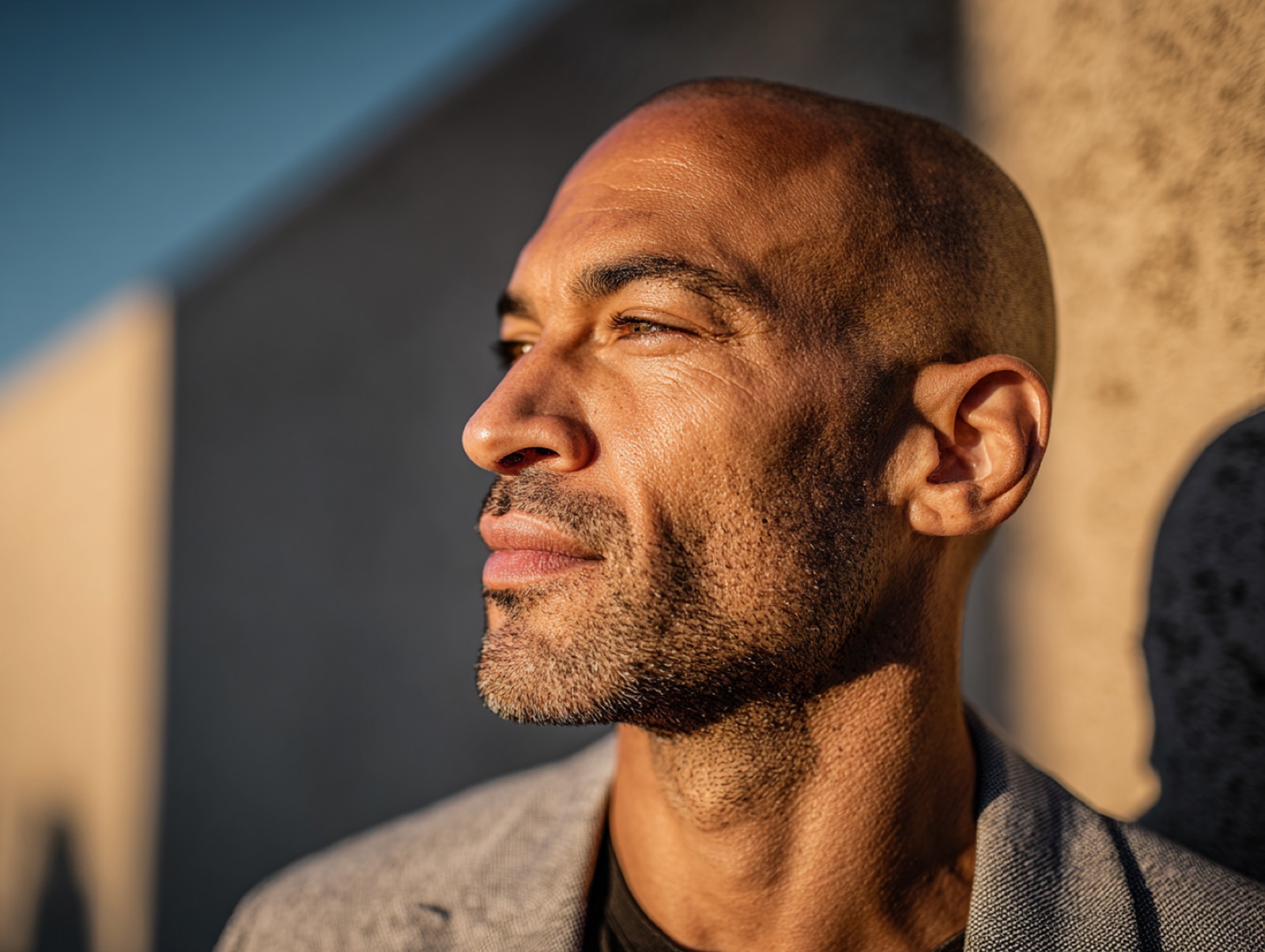
Directional sun with true shadows, one setting for every frame — never flat studio light.
Freckles, wrinkles, gray hair, skin texture. Faces with character, minimally retouched.
Warmth lives on people and wood. Blue lives in glass, sky, and distance. Never a global orange cast.
Desert modernism: glass, concrete, wood — and a horizon. The office is never the whole world.
Faint smiles, focus, and thought. No burst laughter, no high-fives, no performing for the camera.
One world, one setting: warm sun on people, hazy blue in the world beyond. The desert horizon ties every frame together.
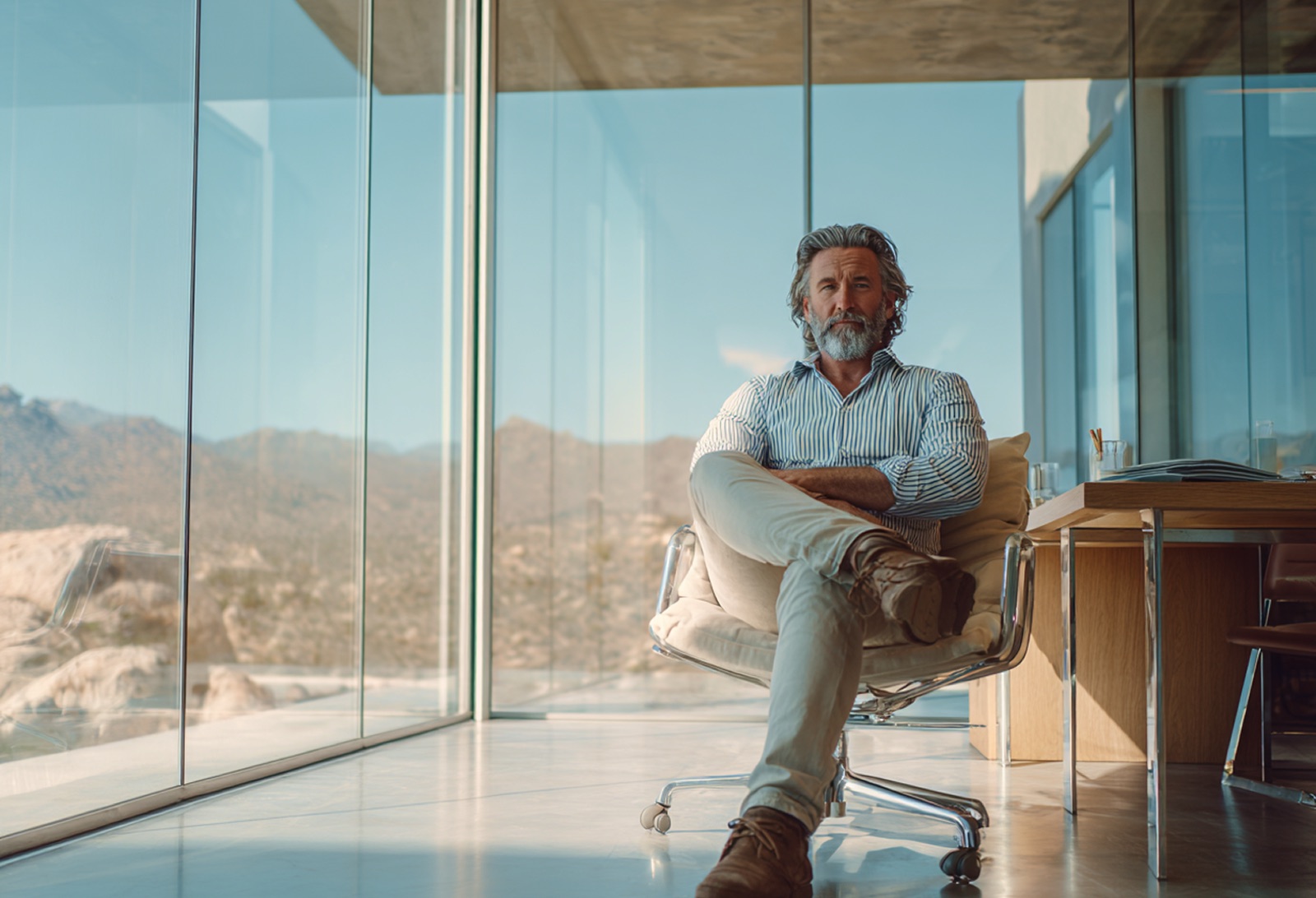
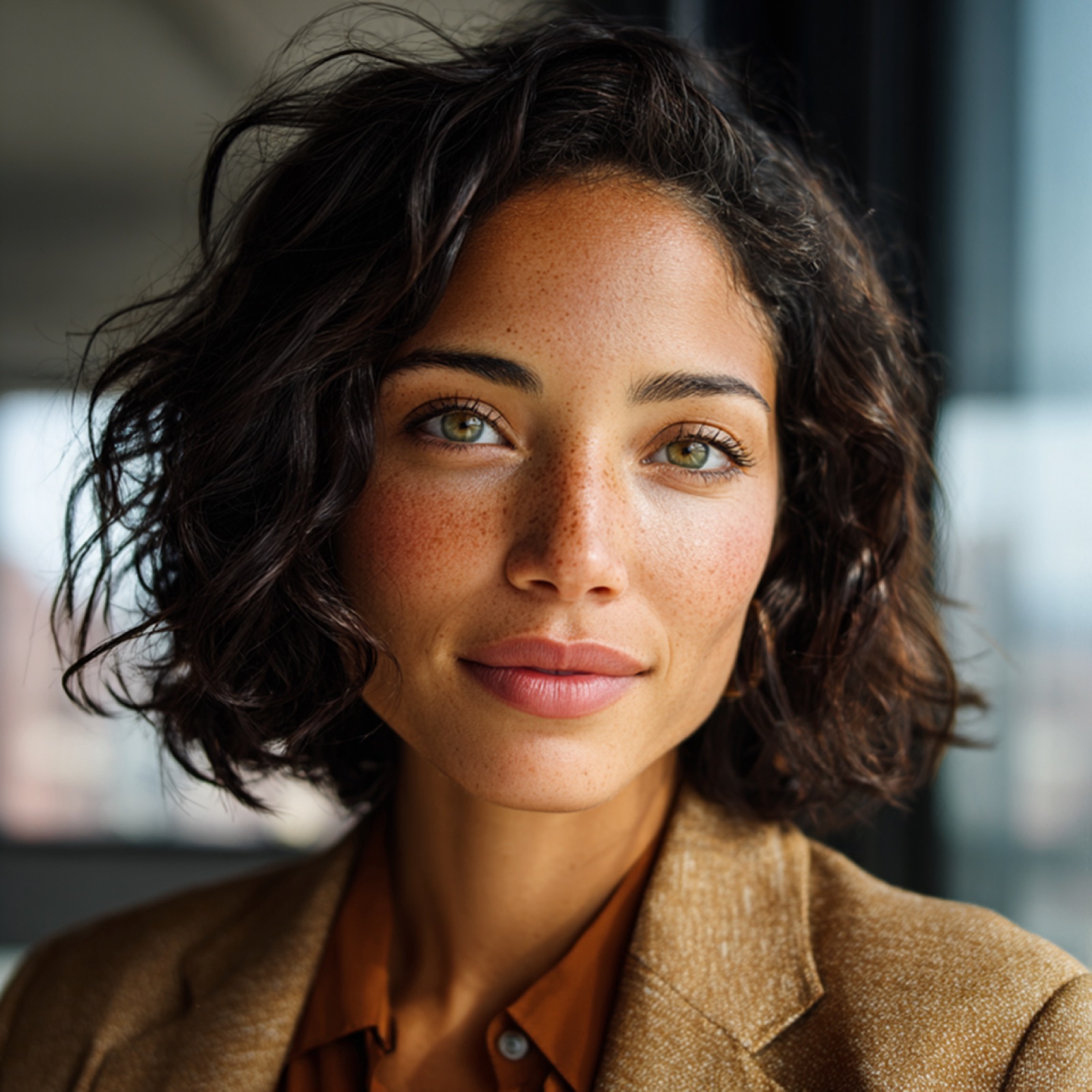


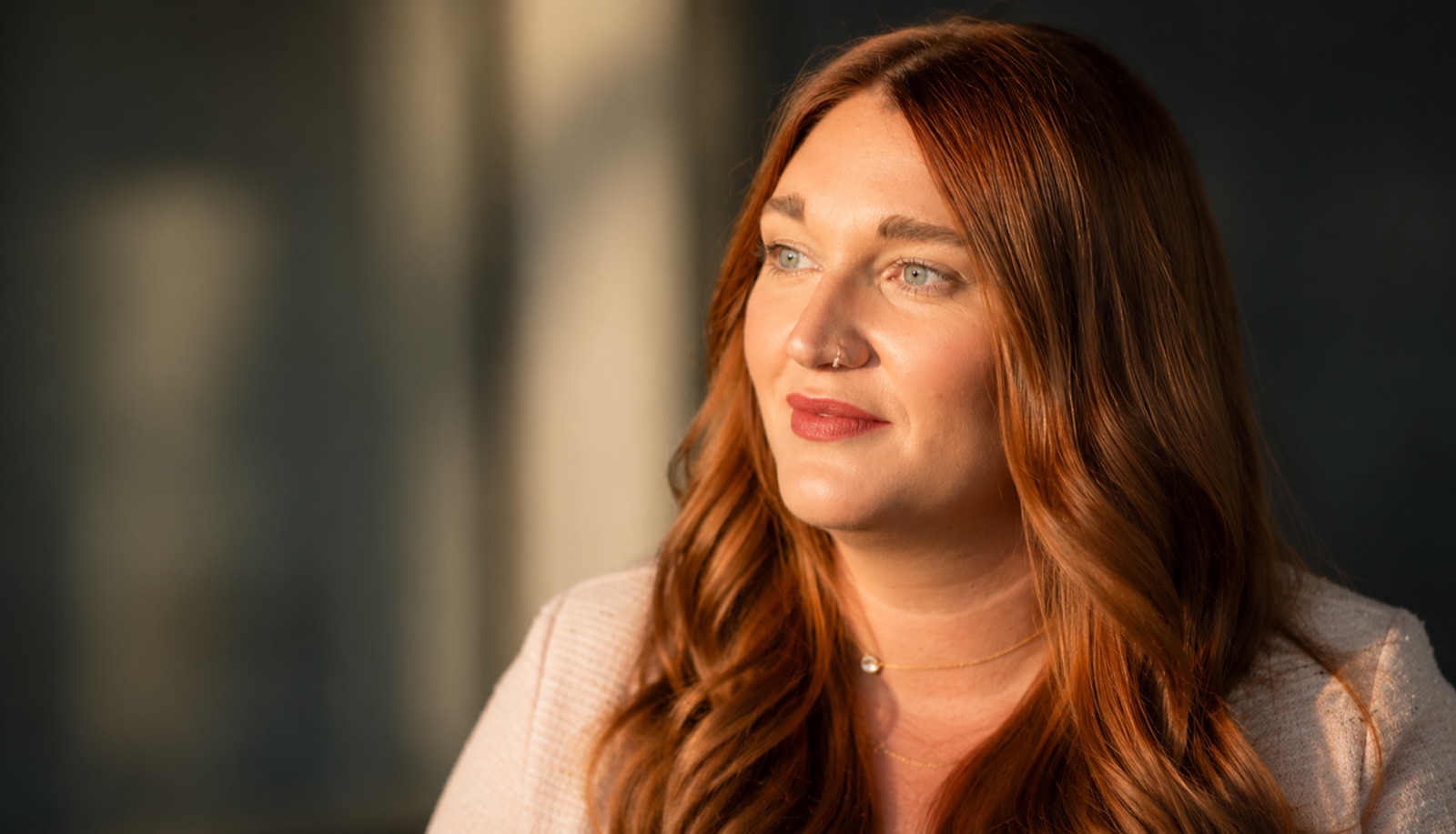
Every image is lit the same way: warm directional sun on the subject, hazy blue daylight in the world beyond. What shifts is only how much of the world the crop lets in — never two looks, one setting framed differently.

Tight crops melt the world into creamy bokeh, so the warm side of the setting carries the frame. Same sun, same world — just less of it in view.

Step back and the glass, sky, and distance hold their hazy blue while the same sun rakes the subject. The blue arrives with the world, not with a new setup.
The signature balance is a temperature split, not a filter — and the world is always in frame. Every image keeps a glimpse of something beyond the office: a horizon through glass, distance, daylight. Grade stays muted and film-like — soft bloom, gentle haze, subtle grain. Never crisp, never neon, never HDR.
Every image in the library is one of three shots. Know which one you need before you brief, generate, or crop.
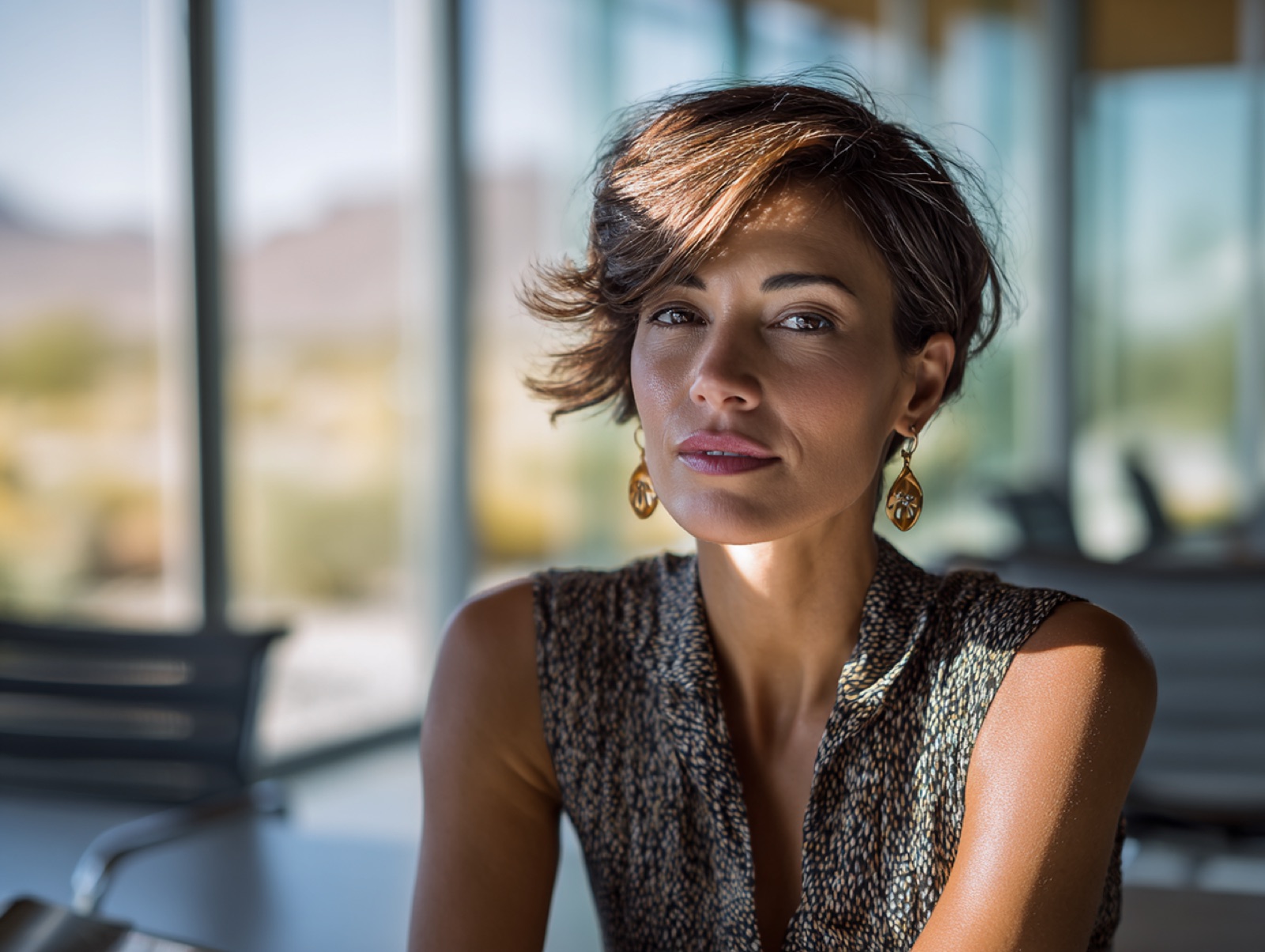
Face and character, shallow depth. The library leans on these: the hero reads in the eyes.
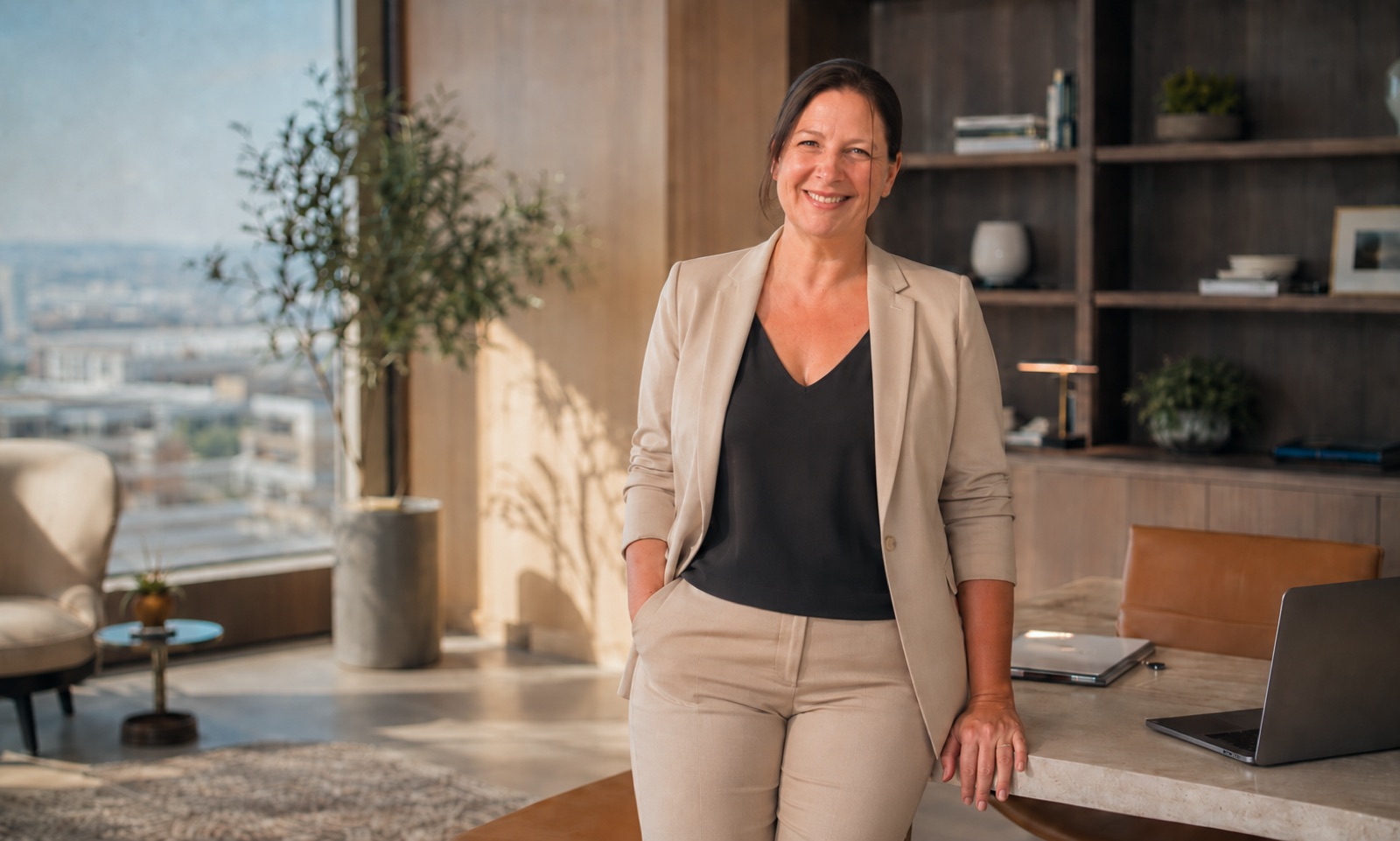
The person in their world — posture relaxed, space doing half the talking.

Mid-gesture, mid-conversation, mid-stride. Nobody looks at the camera.
Our people look like the people who actually do this work — every age, every background, nobody generic. If a face could model for anyone, it models for no one.


The camera behaves like a colleague who happened to look up — layered foregrounds, shared focal points, natural distance. Nothing is posed, but nothing is accidental.

Every rule here was learned by breaking it. When an image feels like stock, it is failing one of these.
| ThisDirectional sun raking the face, one side in soft shadow. | Not thatFlat, even light on every surface — the catalog look. |
| ThisHazy desert hills and sky, far and soft behind glass. | Not thatCity skyscrapers dominating the window — corporate-finance stock. |
| ThisNeutral wardrobe, value contrast between two people. | Not thatCoordinated warm outfits on both subjects. |
| ThisA quiet grin at the tail end of a laugh, eyes on each other. | Not thatPeak open-mouth laughter, high-fives, celebration theater. |
| ThisSpecific faces: gray stubble, freckles, lines that say something. | Not thatThe default handsome model with a resume-free face. |
| ThisMinimal, uncluttered space — concrete, wood, daylight. | Not thatProp shelves, lamp-lit corners, evening-office mood. |
| ThisMuted film grade, soft bloom, gentle haze, subtle grain. | Not thatCrisp digital clarity, saturated cyan skies, HDR punch. |
This library is AI-generated, so the prompt is our photography direction. Assemble every prompt from four blocks and finish with the style suffix. One suffix carries the whole look.
warm directional sunlight raking the subject, soft shadow falling across one side, hazy blue daylight in the glass, sky and distance beyond, floor-to-ceiling glass with faint desert hills far in the distance, background heavily out of focus with creamy bokeh, subject sharply isolated, warm skin tones, gentle atmospheric haze, soft highlight bloom, muted desaturated film-like color grade, subtle film grain, candid documentary style, 85mm f/1.8, shallow depth of field, authentic unretouched skin texture, editorial photography --ar 4:3
This chapter shows the system; the reference set in Figma holds the source images at full resolution, organized by shot type.
Closeups, environmental portraits, and action & candid — the full-resolution originals behind this chapter.
09 · 13